
Last reviewed: 13 November 2026
Rail depots, sidings and trackside work sites bring fluid-handling problems into places where access, electrical equipment and moving vehicles can make response difficult. A spill plan needs to work not only inside a maintenance shed but also during possessions, overnight work and remote inspections.
Map risks by location
In depots, check refuelling points, maintenance pits, wash bays and lubricating systems. On trackside projects, look at mobile plant, hydraulic hose connections, stored fuels and temporary generators. Near lineside drainage, even small leaks can travel towards ditches, culverts and nearby watercourses.
Do not allow spill equipment to become an obstruction or reason to enter an unsafe railway environment. Access, traction power, plant movements and isolation requirements take priority over immediate clean-up.
Choose containment for the substance and surface
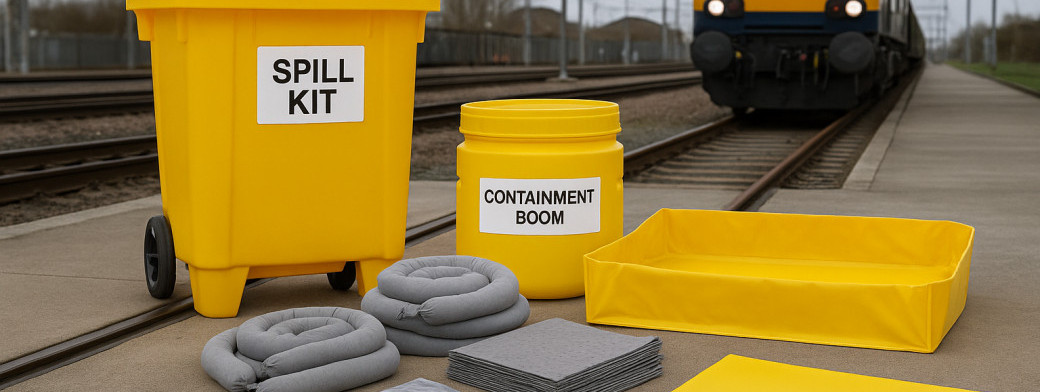
Use oil-only absorbents for appropriate fuel or lubricant spills and spill kits stocked according to the depot or site risk assessment. Water-based coolants and cleaning agents may require other compatible materials. Drip trays beneath equipment can reduce recurring drips at source; bunding may be needed around stored bulk liquids.
Temporary drain covers may support a trained response at suitable drainage points, but must not interfere with railway safety or create uncontrolled flooding.
A workable first-response procedure
- Stop work and alert the person responsible for the worksite or depot.
- Establish safe access, including relevant railway isolation and movement controls.
- Identify the fluid and assess the size and direction of the release.
- Contain only where safe and within the responder’s training and the approved plan.
- Notify the environmental and operational contacts, record the event and ensure waste is properly assessed.
Train across shifts and contractors
Include the incident plan in contractor induction and briefings before possessions. Inspect kits after every deployment and check vehicle-based equipment for damage or missing contents. Office of Rail and Road health and safety guidance provides the wider regulatory context; Network Rail sustainability information may also be useful for infrastructure projects.
An effective rail spill plan is as much about safe access, reporting and prevention as it is about absorbents.