
Last reviewed: 13 November 2026
A vehicle wash bay generates contaminated water even when there has been no accidental spill. Detergent, road grime, oil residues, brake dust and dirt can all enter the wash water. The first decision is therefore where the water is meant to go, not which absorbent to put on the floor.
Identify the drainage and permitted discharge route
Separate clean surface-water drainage from foul sewerage and dedicated wash-water collection. Do not assume a nearby gully is approved for vehicle washing. Depending on the site, contaminated water may need sealed collection, treatment, authorised trade-effluent discharge or removal by a suitable waste carrier.
Ordinary oil interceptors can separate some free oil, but they do not make detergent-rich wash water or dissolved pollutants safe to release. Check the drainage plan and the specific conditions of any water company consent or environmental permit.
Prevent leaks around washing equipment
Look at detergent dosing tanks, pumps, transfer hoses, pressure washers and vehicle maintenance areas. Position drip trays under known small drips where suitable and inspect tanks and seals routinely. absorbent socks may contain an identified minor leak while its source is made safe.
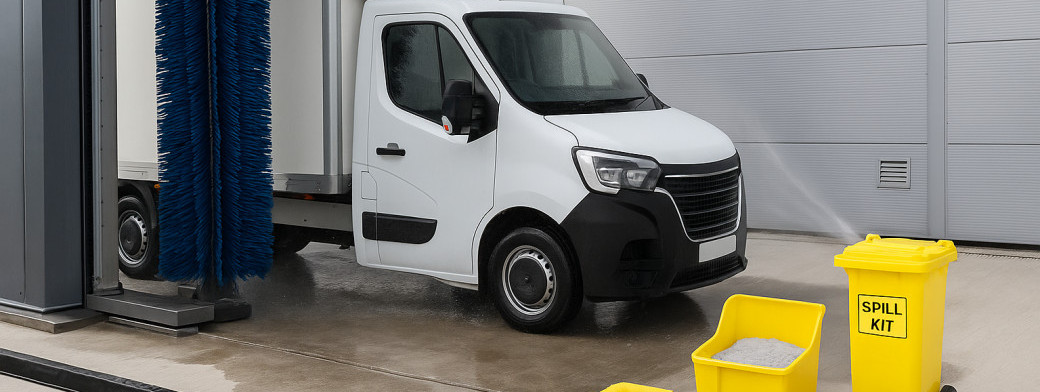
Keep spill kits and absorbents for discrete accidental releases, but do not try to absorb the whole volume of a wash cycle. If the wash bay loses its collection or drainage controls, stop washing and arrange the correct containment or recovery response.
Plan for weather, traffic and waste
- Keep drainage channels clear without bypassing pollution controls.
- Check that vehicles and pedestrians cannot track detergent across walkways.
- Inspect chemical storage and protect concentrated cleaning products from impact.
- Record spills, system failures and corrective actions.
- Segregate recovered oils, liquids and used absorbents for waste classification.
The GOV.UK pollution prevention guidance for England specifically discusses vehicle washing and trade effluent. It recommends collecting contaminated water for reuse, treatment or authorised disposal, or discharging to a foul/combined sewer only with the relevant water company permission.