
Last reviewed: 13 November 2026
In paint and coatings production, a leak may contain a water-based pigment dispersion, a viscous resin or a highly flammable solvent blend. Those differences affect the health risk, clean-up method and waste route. Treating every coloured liquid as a routine spill is unsafe and often makes the clean-up more difficult.
Identify the formulation before choosing absorbents
Review mixing vessels, resin transfer lines, drum tipping stations, pigment dosing, filling machines and solvent cleaning points. Check the actual formulation and safety data sheet: some hardeners, oxidisers, reactive resins and solvents demand specialised controls.
Where a release involves flammable solvent vapour, restrict access, control ignition sources in accordance with the site procedure and use trained responders. Ordinary powered equipment, fans and materials should not be introduced without considering the hazardous area assessment.
Reduce transfer losses and protect the work area
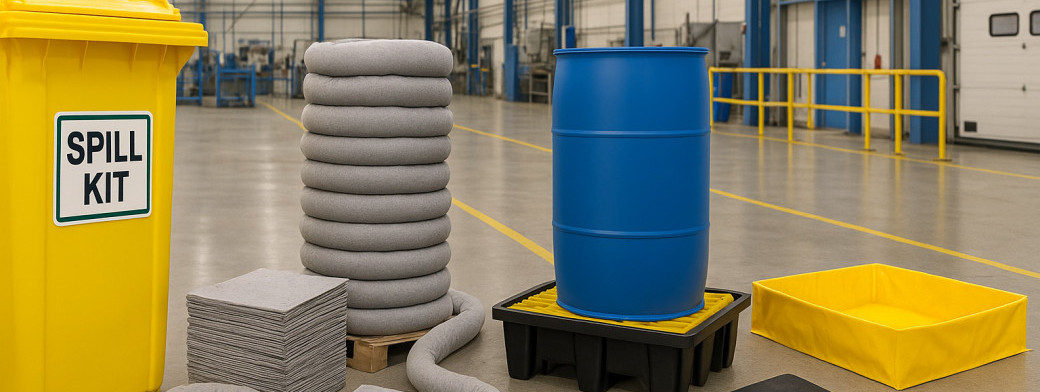
Maintain valves, seals and hoses, and prevent overfilling at blending and filling stations. Correctly specified bunding helps keep process chemicals within their storage or transfer area. Suitable drip trays can support minor collection beneath individual taps, but does not replace bulk secondary containment.
For safe, identified small spills, choose compatible chemical absorbents or absorbents according to the product. Use absorbent socks where appropriate to stop a liquid reaching pedestrian routes. Do not assume that absorbent fibre type or colour proves chemical compatibility.
Waste, cleaning and ventilation
- Keep solvent-containing waste in appropriate containers away from ignition sources.
- Segregate reactive, aqueous and solvent wastes as the waste assessment requires.
- Follow approved cleaning procedures before reopening floors or production lines.
- Inspect local exhaust ventilation and transfer controls where specified.
- Record the cause of each loss and use recurring incidents to improve the process.
The HSE printing and coatings chemical guidance and HSE DSEAR guidance are relevant starting points. Spill clean-up forms one part of a wider process safety system.