
Last reviewed: 13 November 2026
Commercial laundries move large quantities of water, detergents and soiled textiles through tight working areas. Leaks from dosing systems, washer seals or wastewater hoses can quickly create slippery floors, while concentrated cleaning products may also cause skin or eye injuries.
Locate the main liquid risks
Inspect chemical dosing stations, drum storage, wash and rinse lines, washer-extractors, wet loading areas and wastewater collection points. Industrial laundry products may include alkaline builders, bleaches, souring agents and disinfectants. Their properties differ, so a cleaning plan should use the actual labels and safety data sheets rather than a generic description of “detergent”.
Staff handling contaminated laundry may face biological hazards as well as chemical exposure. Spill procedures should therefore align with the laundry’s hygiene controls and the separation of soiled and clean textile areas.
Prevent leakage before using absorbents
Maintain transfer hoses, seals, pump connections and dosing equipment. Use correctly specified secondary containment for chemical stores and drip trays for isolated, compatible drips where suitable. Recurring leakage should be repaired rather than left to saturate pads.
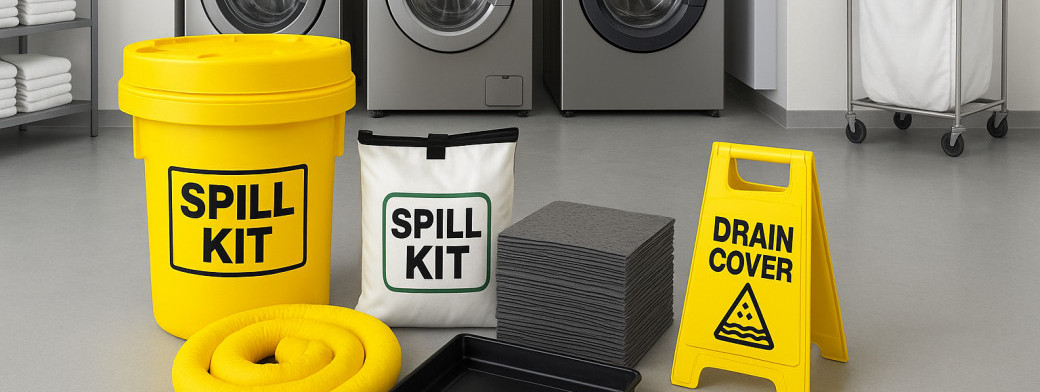
For small, identified, manageable releases, correctly chosen chemical absorbents or absorbents can help stop spreading. Staff should not attempt to neutralise concentrated alkali or bleach without an approved procedure, and incompatible substances must not be mixed during clean-up.
Protect floors and the permitted wastewater route
Laundry wastewater may be subject to trade effluent arrangements. Do not assume that detergent or recovered spill liquid may be discharged to any available gully. Identify surface water, foul sewer and process drains on the site plan. Where relevant and safe, drain covers can help stop an accidental release entering the wrong system.
- Restrict access to contaminated floors until cleaned and dry.
- Use PPE and ventilation according to the substance risk assessment.
- Separate used absorbents from ordinary textiles and general waste.
- Check dosing chemical stocks, storage areas and spill kits each shift.
- Record spill causes and update maintenance schedules.
The HSE COSHH guidance framework is useful for assessing products and exposure. A good laundry response protects staff while keeping chemical waste away from clean textile flows.