
Last reviewed: 13 November 2026
A spill in a food factory isn't always just a slip hazard. If a liquid containing milk, egg, nuts or another allergen reaches the wrong processing area, the consequences can include product contamination, rejected batches and a much more complicated clean-down. An absorbent pad may remove the visible spill without making the surface suitable for food production again.
Identify allergen pathways, not only spill points
Look at raw ingredient intake, dosing lines, mixing tanks, transfer hoses, filling heads and waste collection. A damaged container may spread liquid under equipment; wheels or footwear can then carry traces into an adjacent area. Splashes, aerosols and shared cleaning tools can create separate cross-contact routes.
Food businesses need allergen controls as part of their food safety management arrangements. The Food Standards Agency's allergen checklist offers useful practical prompts, although individual manufacturing systems and applicable national rules still need to be considered.
Keep the product and the clean-up separate
Stop the source where safe, restrict movement through the affected zone and follow the site's allergen incident procedure. Identify the affected ingredient and any possibly contaminated product. Don't simply return recovered liquid or ingredients to production; product disposition should follow the site's food safety decision process.
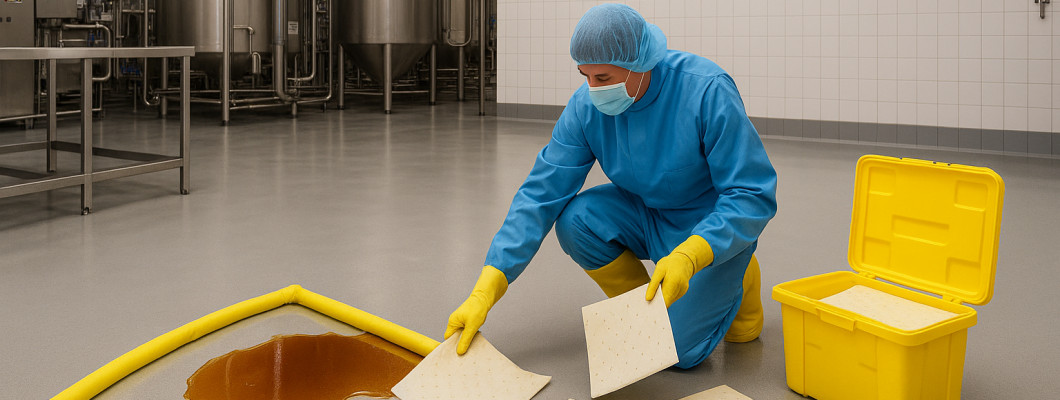
Use designated, compatible clean-up equipment for the area. Where appropriate, absorbent pads or socks can help contain a known spill before cleaning. However, ordinary industrial absorbents should not be assumed to be food-contact approved, allergen-free or suitable for use next to exposed food. Keep them out of direct food contact unless the site has verified their suitability.
Cleaning is not the same as absorption
Once free liquid and contaminated materials have been removed, carry out the approved cleaning procedure for the ingredient, surface and equipment. Wet cleaning may not suit every process; some dry production environments need controlled dry methods. The key is avoiding further spread and verifying that cleaning has worked using the site's validated allergen controls.
Don't rely on visual inspection alone to declare an allergen incident resolved. Depending on the site, documented cleaning verification, targeted tests, line clearance and quality-team approval may be needed before restarting. Make sure waste and used absorbents cannot re-enter food-handling areas.
Plan around everyday operations
Segregate ingredient storage where needed, protect transfer points and inspect hoses and seals. A suitable drip tray may catch some known leaks in non-food-contact locations, provided material compatibility and hygiene have been assessed. Use clearly labelled spill equipment in areas where an appropriate first response can safely occur.
Train production, hygiene and maintenance staff together. People need to know how to prevent the spill spreading, what to report, who decides the fate of affected stock and when the line can reopen. Record incidents and look for repeat faults in valves, couplings and packaging. Effective allergen spill management depends on containment, cleaning and evidence that the process is safe to restart.